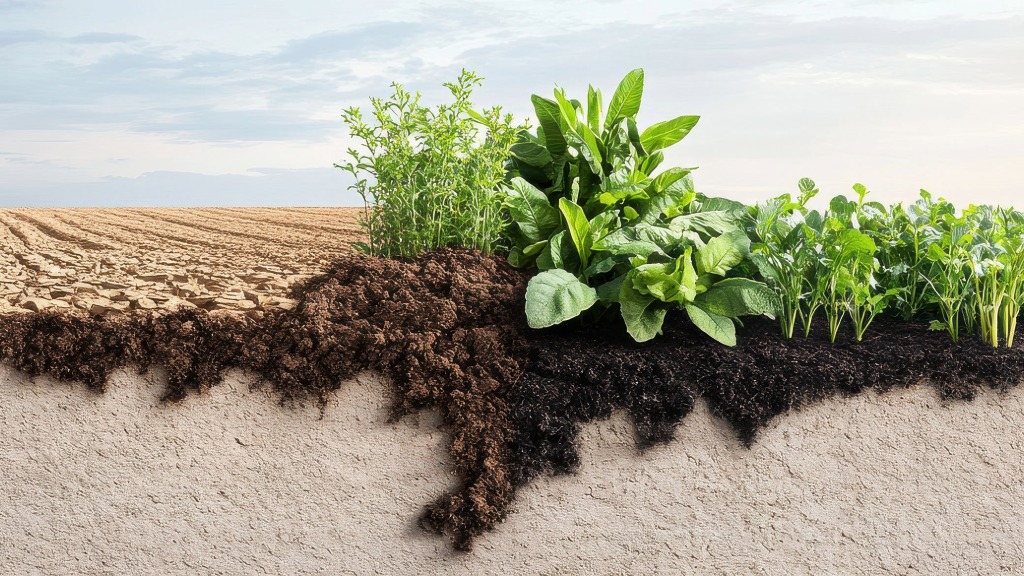
Sustainability has quietly and steadily moved from being a « nice-to-have » marketing plus to becoming an indispensable requirement for nutraceutical companies.
First, the change has come from downstream, with your biggest customers asking about your CSR targets, environmental charter, and the carbon footprint or life cycle assessment of your products before committing their volumes to you. When you calculate your company’s footprint, you’ll be bound to dive into Scope 3 emissions, that comprise all indirect emissions occurring in your value chain, including your raw materials.
Second, the change is becoming hard to ignore in the disruption of your upstream supply chain, exposed to an increasingly VUCA world – Volatile, Uncertain, Complex and Ambiguous. The geopolitical context directly and substantially affected the costs of energy, transportation and fertilizers this year, with a knock-on effect onto the costs and access of virtually all raw materials, especially from agricultural origin. Just when the costs of fertilizers was peaking, the additional stressor of climate extremes jeopardized harvests. 2026 has been the worst year since the beginning of tracking 40 years ago in the UK (1) and main european crops saw a 7-15% yield drop on average (2). Losses have been estimated at about 3.2 billion euros in Europe for grain alone (3). The livelihoods of many growers are at stake, the price of staple foods and raw materials like potatoes, sugar and vegetable oils are going up, and your company’s purchasing gets disrupted.
There are ways to securize this supply chain, supporting the resilience of soils, their water retention capacity, and reducing the dependency on imported and volatile nitrogen fertilizers. In Brazil, the use of microbial inoculants for soybeans has saved 15 billion USD in just one growing season (4), corresponding to about 100 million tons CO2e saved. In Europe, 60% of the nitrogen supply is imported, mostly from Russia. The bioeconomy is ready and mature to substitute a part of these inputs by biological nitrogen fixation in legumes AND row crops including corn, wheat, barley, beets, etc. Microbial fermentation can easily be done locally, and this production is low-carbon compared to the energy-intensive Haber-Bosch process. The inoculation of microbes reinforces the soil microbiome rather than degrading it, supporting an improved soil structure and water stress resilience.
The shift towards such biosolutions and the pillars of regenerative agriculture (no-till or low-till, cover cropping, and complex crop rotations) are key levers of sustainability. These practices restore the microbial life that holds soil together, helping it resist erosion.
They improve soil structure, reducing compaction and leaving space for air and water circulation, supporting soil biodiversity and water retention. The development of bacterial and fungal populations in soils directs root exudates and thus atmospheric carbon dioxide into soil biomass and glomalin, the main reservoirs of carbon on land (soils contain roughly 2-3 times more carbon than the atmosphere, and 4 times as much as all vegetation combined on the planet). While biological nitrogen fixation is the most impactful carbon mitigation strategy of agriculture, nurturing fungal life is the most effective sequestration method known to date.
« Biological Nitrogen fixation is the most impactful bio-technological carbon mitigation strategy in global agriculture to date. » – Pablo Hardoim
The 4 per thousand initiative (5) claims that if all agricultural land increased organic matter in soils by 0,4% every year, all anthropic GHG emissions would be compensated, while in parallel reinforcing soil fertility and resilience to climate stress.
Indeed, healthier, livelier soils show better water retention capacity, protecting from yield drops in seasons of droughts or floods (8% yield drop in regenerative conducted farms vs an average of 22% losses in conventional farms in the same regions (6). When companies secure long-term supply agreements with regenerative farmers, they securize their supply, support the transition and reduction of greenhouse gas emissions, actively build the organic matter of the soil, which is the capital on which future productivity will be based, and at the same time, they meet the requirements the sales teams are facing, obtaining the preference of key accounts.
Incidentally, sourcing from regenerative agriculture and healthy soils also improves the nutritional quality (vitamins, minerals and antioxidants) of the ingredients (7). Omega3 to omega6 ratios are better for animals raised on grass and flax seeds (5 ,8) with short-term measurable impacts for the health indicators of these products’ consumers. Indeed, boundaries between food and health are shrinking, and healthy aging, brain health and cardiovascular health are all rooted in healthy soils and the farming practices that restore them.
The way we choose to conduct farming has the power to support soil health, water retention, biodiversity, climate mitigation, and the nutritional quality of the crops. Every company has the leverage, power and responsibility for its sourcing, and for the strategic decisions to bring robustness to their supply chain in front of the turbulence that is now onto us.
Sustainability is no longer to be seen as a hard-to-justify extra cost for the financing department’s good heart. The World Economic Forum has recognized that over 50% of global GDP is dependent on nature and ecosystem services (9), and that the global monetary value of ecosystemic services is about twice the total GDP value (10). We can no longer ignore that protecting natural capital is not an external cost, but an operational prerequisite for business continuity. It is sneaking into systemic mindsets, bridging gaps between purchasing, production and sales. Just as the microbiome space helped us change our conception of the human self from individual to holobiont (seeing ourselves as ecosystems), so does the vulnerability intrinsic to our time forces us to frame a company in the continuum from supply to sales – and ideally, close the circle. Sustainability is the key to robustness in the chain and survival of our organizations.
Sustainability is no longer a matter of preserving environmental health. It is acknowledging that the health of people, animals, plants, soils, waterways and companies is one and indivisible.
References and notes
- Energy & Climate Intelligence Unit | Impact of heatwaves and drought…
- European agriculture hit hard by exceptionally hot and dry summer – Joint Research Centre
- https://eciu.net/media/press-releases/european-drought-and-heat-hits-grain-farmers-harder-than-feared-costs-up-to-3-2-billion
- Economic value of biological nitrogen fixation in soybean crops in Brazil – ScienceDirect
- L’Initiative internationale “4 pour 1000”- Les sols pour la sécurité alimentaire et le climat
- Drought Resilience — Farming, Risk & Measurable Outcomes – Soil capital
- Soil health and nutrient density: preliminary comparison of regenerative and conventional farming – PubMed
- Weill, P. (2025). Une seule santé: Enquête sur les sols où nos maladies prennent racine [One health: Investigation into the soils where our diseases take root]. Actes Sud.
- https://www.weforum.org/publications/nature-risk-rising-why-the-crisis-engulfing-nature-matters-for-business-and-the-economy/
- Robert Costanza, Rudolf de Groot, Paul Sutton, Sander van der Ploeg, Sharolyn J. Anderson, Ida Kubiszewski, Stephen Farber, R. Kerry Turner, Changes in the global value of ecosystem services, Global Environmental Change, Volume 26, 2014, Pages 152-158, ISSN 0959-3780, https://doi.org/10.1016/j.gloenvcha.2014.04.002.

Complete Gut Health Solutions One Ecosystem. Seven Science-Led Strateg...

Peer-reviewed – Prebiotic Efficacy of a Fiber-Polyphenol Complex...

The Blueprint – How Functional Ingredients Pioneered the Digital...
A Word With – Reyhan Nergiz Unal and Yingying Wu – PB Leiner
Peer-reviewed – Development of Plant-Based Sodium Alginate-Aloe...

A Word With – Shaheen Majeed – CEO & Managing Director, Sab...

Peer-reviewed – Probiotic yeasts for gut microbiota and immune d...

Peer-reviewed – Cellular Health Powering Fertility: Mitochondria...