Introduction
Carob (Ceratonia siliqua L.), a leguminous tree native to the Mediterranean region, has been long valued for its nutritional and functional properties, particularly its high content of sugars, dietary fiber, and bioactive compounds such as D-pinitol and polyphenols (1). Formerly used primarily as a cocoa substitute, carob is increasingly recognized as a sustainable, clean-label ingredient containing an impressive corpus of natural compounds with potential health benefits relevant to modern dietary challenges, including metabolic regulation and gut health (2) and, by extension, immune support.
Among carob-derived ingredients, the pulp fraction represents an underexplored source of multifunctional dietary fiber. Unlike carob seed-derived galactomannan gums, carob pulp contains a structurally diverse fiber matrix composed of pectin, cellulose, hemicellulose, lignin, and starch (3,4). This complex composition, coupled with naturally associated polyphenols, positions carob pulp as a promising candidate for prebiotic product development.
Prebiotics are commonly defined as non-digestible substrates selectively utilized by host microorganisms, conferring health benefits through mechanisms such as stimulation of beneficial bacteria (e.g., Lactobacillus and Bifidobacterium), suppression of pathogens, and production of short-chain fatty acids (SCFA) that have been shown to help support colonic and systemic health (5,6). Recent studies have begun to elucidate carob’s role in modulating the gut microbiota. A 2021 study demonstrated that carob fruit extract-enriched meat significantly improved gut microbiota diversity and colonic barrier integrity in a type 2 diabetes animal model (7). Similarly, research in 2023 revealed that carob phenolic extracts exert specific antimicrobial effects that inhibit pathogenic strains, yet preserve beneficial bacteria (8).
Despite growing interest in prebiotic fiber, studies focused on the native fiber-polyphenol matrix remain lacking. This study aimed to evaluate whether a carob product rich in dietary fibers and intrinsic polyphenols meets prebiotic classification criteria. Using the validated Mucosal Simulator of the Human Intestinal Microbial Ecosystem platform (M-SHIME®) (9,10), we assessed: resistance to upper gastrointestinal digestion, fermentability by human colonic microbiota (with SCFA profiling), and selectivity of microbial stimulation.
Results of the study showed that carob fiber-polyphenol complex was completely resistant to upper gastrointestinal digestion, delivering 7.37g fermentable fiber per serving with 70.9% of polyphenols remaining fiber-bound. Remarkably, fermentation by human gut microbiota yielded 35% higher total short-chain fatty acids, including a 56% increase in health-promoting butyrate. Microbiome analysis revealed selective enrichment of beneficial Bifidobacterium and butyrate-producers, alongside suppression of pathogenic bacteria as Escherichia-Shigella.
Materials and Methods
Test Material
The fibrous fraction derived from carob fruit after sugars extraction was supplied by a commercial manufacturer. Compositional analyses at ISO 17025-accredited laboratories determined: 52.6% total dietary fiber (including 7.5% pectin and 31.7% cellulose), 2.8% ash, 4mg GAE/g polyphenols (dry-weight basis), and 12% moisture. In this study, the term “carob pulp” refers specifically to this material produced using a proprietary extraction process.
Assessment of Digestive Resistance
14g of test material underwent simulated gastrointestinal digestion using the fed-state InfoGest consensus method (11), modified with dynamic gastric pH profiling and dialysis membrane to simulate small intestinal absorption (12,13). Fiber fractions were analyzed by HPAEC-PAD, and polyphenols by Folin-Ciocalteu method.
Colonic Fermentation Study
A 48-hour colonic fermentation study was performed via M-SHIME® using fecal samples from three healthy donors (26-31 years; no antibiotic intake for ≥6 months). Predigested carob pulp (20mL, 743mg equivalent) was combined with colonic medium (43mL), fecal inoculum (7mL, 16.7% w/v), and mucin-coated carriers in anaerobic vessels at 37°C. Blank controls contained all components except test substrate. Metabolic activity was monitored at 0h, 6h, 24h, and 48h by measuring: pH, gas pressure, lactate, SCFA (14), branched SCFA (15), and ammonium (16).
Microbiota Analysis
Luminal and mucosal samples were collected at 0h, 24h, and 48h. Luminal samples were analyzed using 16S-targeted Illumina sequencing coupled with flow cytometry for absolute bacterial abundances, while mucosal samples provided relative abundances only (17). 16S rRNA gene sequencing targeted the V3-V4 hypervariable regions using primers 341F and 785R, generating 424 bp amplicons via paired-end sequencing (2x250bp). Sequence processing utilized mothur (v.1.44.3) following the MiSeq SOP protocol, including read assembly, quality filtering against SILVA SEED alignment (v138), chimera removal, and taxonomic classification using SILVA NR v138_1. Operational taxonomic units (OTUs) were clustered at 97% similarity. Sequences classified as Eukaryota, Archaea, Chloroplasts, Mitochondria, or unclassified at Kingdom level were removed, as were reads with maximum abundances ≤5.
For luminal samples, total bacterial cell counts were determined using BD Accuri C6 Plus Flow Cytometer with high flow rate settings. Bacterial cells were distinguished from debris using a threshold of 700 on the SYTO channel, enabling conversion of relative abundances to absolute values.
Statistical Analysis
Metabolic activity parameters (pH, gas, SCFA, lactate, ammonium) were compared between carob pulp and blank control by paired Student’s t-tests in Microsoft Excel (95% confidence interval; p < 0.05 considered significant), with data averaged across three donors (n=3 biological replicates, each donor treated as an independent replicate). Continuous metabolic variables are expressed as mean ± standard deviation (SD). Microbial community composition was assessed at three levels: (i) Alpha diversity, quantified by four indices: Observed taxa (number of distinct OTUs detected), Chao1 (richness estimator that accounts for rare and undetected species), Shannon (combined species richness and evenness), and Simpson (integrates richness and evenness, assigning more weight to prevalent or dominant species; values closer to 1 indicate lower diversity), calculated on relative abundance data; (ii) Beta diversity, assessed by Discriminant Analysis of Principal Components (DAPC) (18) performed in R (adegenet package): sequence data were first transformed by principal component analysis (PCA), and discriminant functions were then fitted to a priori-defined groups (treatment and timepoint). The number of retained principal components was determined by cross-validation (xval.dapc). (iii) Differential abundance, determined by two complementary approaches: LEfSe (Linear Discriminant Effect Size) (19), which identifies taxa whose abundances differ significantly between conditions using Kruskal–Wallis and Wilcoxon tests (p ≤ 0.05) coupled with Linear Discriminant Analysis to estimate effect size (LDA score threshold ≥ 2.0 considered biologically relevant), with the 20 most significant genera visualized; and treeclimbR (20), a hierarchical differential abundance method that tests across a phylogenetic tree and resolves enriched nodes at the taxonomic level supported by the data, implemented in R using the TreeSummarizedExperiment framework (p < 0.05 and |log2 fold change| ≥ 1 as thresholds for statistical and biological significance, visualized as volcano plots). A volcano plot is a type of scatterplot that shows statistical significance (P value, y-axis) versus magnitude of change (fold change, x-axis). The obtained scatterplot thus classifies taxa into four different categories based on abundance in compared treatments: a) not significant and not biologically relevant, b) biologically relevant, but not statistically significant, c) statistically significant, but not biologically relevant, and d) biologically and statistically significant.
Results
Digestive Resistance
To evaluate the prebiotic potential of carob pulp, the material was subjected to simulated upper gastrointestinal tract digestion. This sequential digestion model enables identification of non-digestible components that escape host enzymatic breakdown and reach the colon, where they can function as substrates for microbial fermentation, meeting the mechanistic criteria for prebiotic classification. Analysis of the undigested residue revealed selective preservation of fiber fractions. Insoluble high molecular weight fiber constituted the predominant fraction (0.47g/g product), with soluble high molecular weight fiber at 0.06g/g product. Total fiber delivery was approximately 7.37g per 14g serving.
Polyphenol analysis showed increases in total extractable content post-digestion (6.20mg vs 3.67mg) due to matrix disruption during simulated passage. Thus, the colonic-delivered fraction comprised 70.9% fiber-bound polyphenols and 27.7% bioaccessible polyphenols, ensuring targeted delivery of bioactive compounds to the gut microbiota.
Fermentation and SCFA Production
Predigested carob pulp was incubated for 48 hours with fresh fecal samples from three healthy adult donors using the M-SHIME® to evaluate prebiotic effects on the metabolic activity and community composition of colonic microbiota.
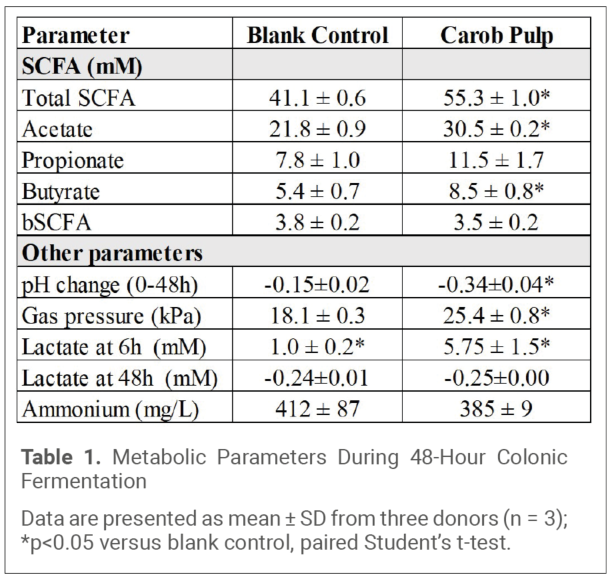
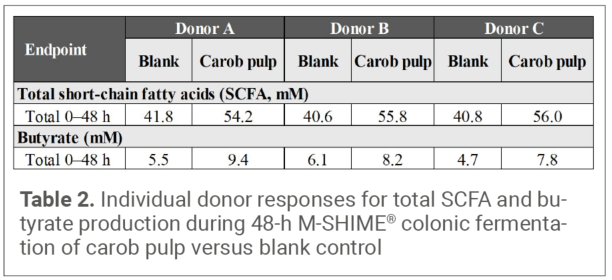
Fermentation was evidenced by significant shifts in metabolic parameters compared to volume- and matrix-matched blank controls (Table 1). Fermentation significantly increased total SCFA by 35%, with butyrate showing the most pronounced rise at 56% (p<0.05). The SCFA and butyrate responses were consistent in direction and magnitude across all three individual donors (Table 2), with carob pulp producing a higher total SCFA and butyrate output than blank control in every case. Active microbial cross-feeding was evidenced by transient lactate accumulation at 6h and subsequent complete depletion. Ammonium and branched short-chain fatty acids (bSCFA) levels were lower in the carob pulp condition than in the blank control (385 vs. 412 mg/L ammonium; 3.5 vs. 3.8 mM branched SCFA). Although these differences were not statistically significant, their direction is consistent with a minor shift away from proteolytic fermentation, which may accompany a more saccharolytic fermentation profile. Gas production remained moderate (25.4 kPa, vs. 18.1 kPa for blank control), well below the 100 kPa threshold above which bloating and flatulence-associated discomfort is expected (21).
Microbiota Modulation
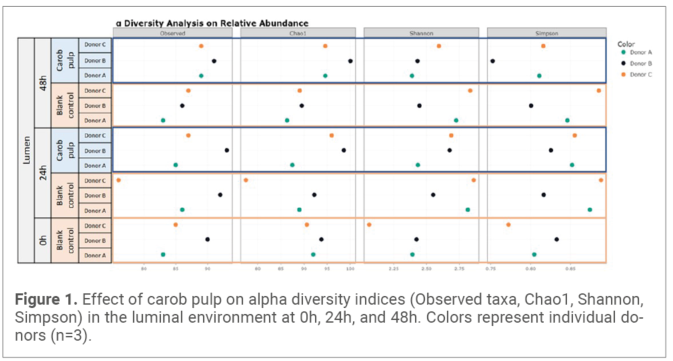
Carob pulp fermentation induced significant microbial community restructuring. Alpha diversity showed reduced species richness, indicating selective bacterial stimulation consistent with prebiotic activity (Figure 1). Diversity of genetic variation (DAPC) revealed clear treatment-control separation at 24h and 48h in both luminal and mucosal environments (Figure 2).
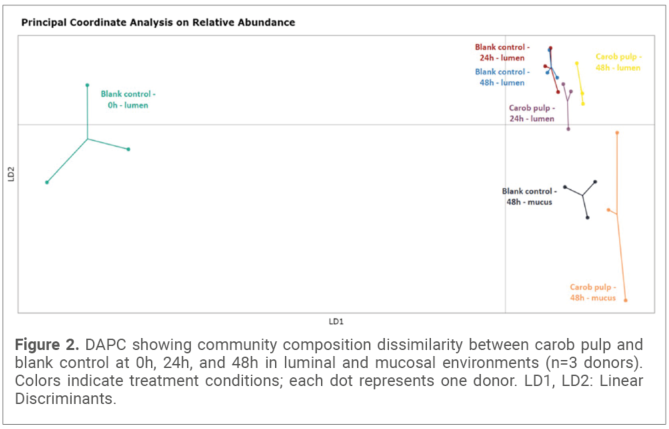
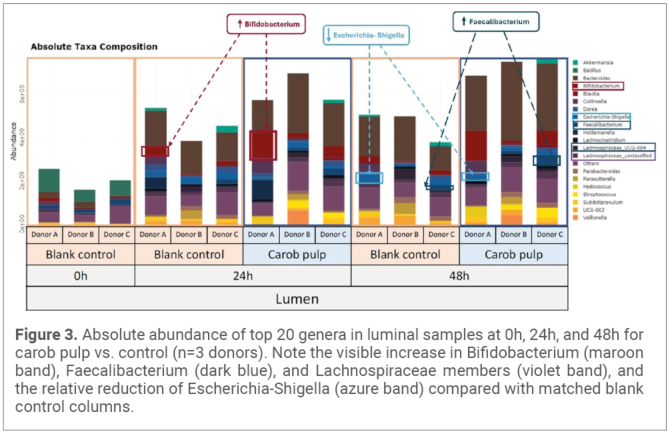
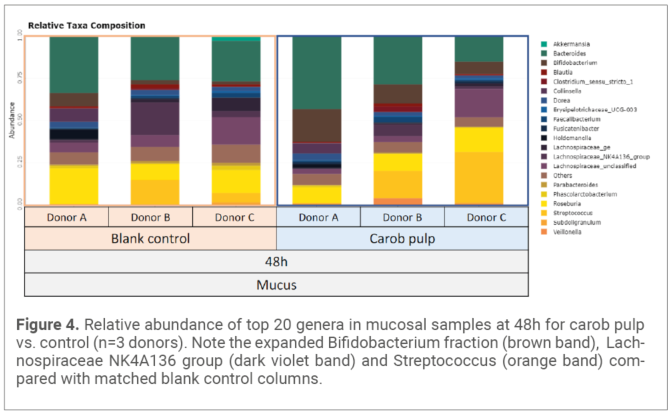
Microbial community composition across luminal and mucosal samples was assessed using 16S rRNA gene sequencing. Taxonomic composition analysis revealed distinct prebiotic effects in both gut compartments. In the lumen, carob pulp stimulated the growth of beneficial bacteria, including Bifidobacterium, Faecalibacterium, and Lachnospiraceae members, while suppressing the harmful Escherichia-Shigella (Figure 3). In the mucosal environment, Bifidobacterium, Lachnospiraceae NK4A136 group, and Streptococcus were enriched, (Figure 4). These compartment-specific shifts demonstrate prebiotic-driven modulation throughout the gut ecosystem.
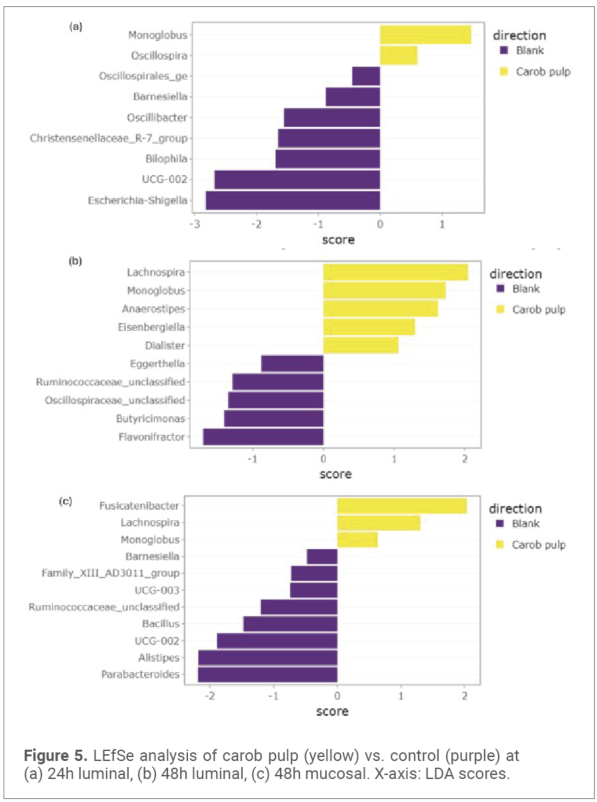
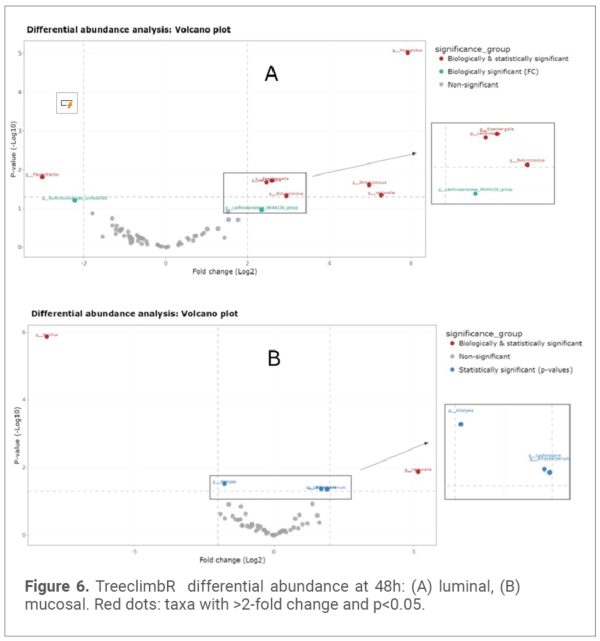
By 48h, members of the Lachnospiraceae family (Lachnospira and Anaerostipes) emerged as dominant contributors. Both are known for producing SCFA, including acetate, lactate, and butyrate. In the mucosal compartment, Fusicatenibacter (also Lachnospiraceae) showed increased abundance. Differential abundance analysis (treeclimbR; Figure 6) confirmed a biologically and statistically significant increase in Butyricicoccus, Eisenbergiella, Monoglobus and Veillonella genera, whereas certain members of Firmicutes were notably reduced. This suggests that niche competition may favor bacteria able to metabolize substrates derived from carob.
Discussion
Prebiotic Criteria Fulfillment
The results confirm that this carob fiber-polyphenol compound exhibits prebiotic characteristics per International Scientific Association for Probiotics and Prebiotics (ISAPP) criteria. The complete resistance to upper GI tract digestion, with 70.9% of polyphenols remaining fiber-bound, ensures targeted substrate delivery to the colon where microbial fermentation can occur. The resulting SCFA profile, particularly the 56% butyrate increase, carries significant health-support implications: butyrate could serve as the primary colonocyte energy source and exert anti-inflammatory (22), insulin-sensitizing (23), and GLP-1-stimulating effects (24), while acetate contributes to lipid metabolism and appetite regulation (25). The selective enrichment of Bifidobacterium and butyrate producers, coupled with Escherichia-Shigella suppression (26,27), demonstrates that this carob-derived matrix confirms selective microbiota modulation.
The importance of adequate SCFA production is illustrated by various gastrointestinal conditions. Individuals with celiac disease, inflammatory bowel disease, and irritable bowel syndrome frequently exhibit reduced microbial diversity and diminished SCFA production capacity, especially of butyrate [28,29]. These observations underscore the nutritional value of dietary fibers that support diverse microbial communities capable of sustained SCFA production, and could be particularly relevant for individuals seeking to maintain optimal gut function.
Mechanistic Insights into Prebiotic Action
Dual-Fiber System Benefits
The combination of 0.8g soluble fiber and 6.57g insoluble fiber fractions enable distinct fermentation dynamics: Soluble fibers ferment rapidly in the proximal colon (0-24h), initiating SCFA production and pH reduction, while insoluble fibers sustain fermentation in distal regions (24-48h), preventing substrate depletion (30). This dual-fiber action offers superior whole-colon coverage compared to single-component prebiotics such as inulin (31) or resistant starch (32).
Importantly, this carob-derived product delivers its dual-fiber profile naturally, with soluble pectin supporting early proximal fermentation and insoluble cellulose sustaining distal activity, mimicking the synergistic effects of engineered fiber blends that combine fast- and slow-fermenting components (33,34). This offers broad-spectrum prebiotic functionality as a single, minimally processed ingredient, creating a significant advantage for clean-label functional food formulation.
Fiber-Polyphenol Synergy
The carob fiber matrix retains 70.9% of polyphenols, protecting them from absorption in the small intestine and enabling gradual release during colonic fermentation (35). This creates a unique bioactive delivery system with dual functionality: fiber fermentation produces SCFA, while released polyphenols exert direct antimicrobial effects. The observed Escherichia-Shigella suppression likely reflects synergistic mechanisms, competitive exclusion via SCFA-mediated pH reduction combined with polyphenol antimicrobial activity (36,37). Importantly, this structure-function relationship delivers prebiotic outcomes that exceed what the components achieve individually (38,39), positioning this material as a multifunctional ingredient for gut-health applications.
Specialized Bacterial Networks and Cross-feeding
The timed lactate dynamics suggest active cross-feeding networks essential for optimal SCFA production. Primary degraders (Monoglobus for pectin (40) and Bifidobacterium for diverse fibers) produce lactate, which accumulates transiently (~5.75 mM at 6h) before conversion by secondary fermenters. Anaerostipes transforms lactate and acetate into butyrate (41), while Veillonella produces propionate. The enrichment of four Lachnospiraceae genera (Anaerostipes, Lachnospira, Eisenbergiella, Fusicatenibacter), key butyrate producers linked to intestinal health (42), alongside mucosal colonization by Fusicatenibacter, demonstrates prebiotic effects extending from lumen to mucus-associated microbiota, suggesting comprehensive gut ecosystem modulation.
Limitations
This in vitro M-SHIME® study cannot fully replicate in vivo complexity. The design involved singlet measurements per donor, with only three donors, limiting statistical power. Future research should incorporate larger cohorts, technical replication, and dose-response studies to confirm clinical relevance.
Conclusions
This study provides in vitro evidence supporting the prebiotic potential of the fiber- and polyphenol-rich carob product. Under simulated colonic conditions, the ingredient demonstrated complete upper GI tract resistance ensuring delivery of 7.37g fermentable fiber and fiber-bound polyphenols per 14g serving, robust fermentation with 35% total SCFA increase and 56% butyrate enhancement, and selective modulation enriching multiple health-associated bacteria (Bifidobacterium, Anaerostipes, Monoglobus, and other butyrate producers) while suppressing the opportunistic pathogen Escherichia-Shigella. The unique dual-fiber system, combined with intrinsically bound polyphenols, creates synergistic prebiotic effects through sustained fermentation along colonic transit, with establishment of cross-feeding bacterial networks and targeted delivery of bioactive compounds. These findings support further evaluation in human intervention studies to determine whether the observed microbiota modulation and SCFA responses occur in vivo. These scientific findings suggest significant potential for developing carob-fiber products as sustainable, minimally processed prebiotic ingredients for incorporation into functional food formulations targeting gut health.
Acknowledgments: The authors thank ProDigest BV for conducting the M-SHIME® fermentation studies.
Conflicts of Interest: The authors are employees of CarobWay GmbH, which supplied the test material. All experimental procedures and analyses were conducted by independent contract research organizations.
Funding: This research was conducted at Prodigest BV as part of product development studies by CarobWay GmbH.
References and notes
- Ikram A, et al. Nutritional, biochemical, and clinical applications of carob: A review. Food Sci Nutr. 2023 Jul;11(7):3641–54. https://doi.org/10.1002/fsn3.3367
- Gioxari A, et al. Carob: A sustainable opportunity for metabolic health. Foods. 2022 Jul 20;11(14):2154. https://doi.org/10.3390/foods11142154
- Calixto FS, Cañellas J. Components of nutritional interest in carob pods (Ceratonia siliqua). J Sci Food Agric. 1982 Dec;33(12):1319–23. https://doi.org/10.1002/jsfa.2740331219
- Nasar-Abbas SM, et al. Carob kibble: A bioactive-rich food ingredient. Compr Rev Food Sci Food Saf. 2016 Jan;15(1):63–72. https://doi.org/10.1111/1541-4337.12177
- Gibson GR, et al. Expert consensus document: The International Scientific Association for Probiotics and Prebiotics (ISAPP) consensus statement on the definition and scope of prebiotics. Nat Rev Gastroenterol Hepatol. 2017 Aug;14(8):491–502. https://doi.org/10.1038/nrgastro.2017.75
- Roberfroid M, et al. Prebiotic effects: metabolic and health benefits. Br J Nutr. 2010 Aug;104(S2): S1–63. https://doi.org/10.1017/S0007114510003363
- Macho-González A, et al. Carob fruit extract-enriched meat, as preventive and curative treatments, improves gut microbiota and colonic barrier integrity in a late-stage T2DM model. Food Res Int. 2021 Mar 1; 141:110124. https://doi.org/10.1016/j.foodres.2021.110124
- Chaalal M, Touati N, Louanchi M, Kaddouri H, Iguer-Ouada M. Evaluation of the antimicrobial potential of digested and undigested carob phenolic extracts: Impact on selected gut microbiota. Acta Aliment. 2023 Dec 4;52(4):612–22. https://doi.org/10.1556/066.2023.00172
- Van de Wiele T, Van den Abbeele P, Ossieur W, Possemiers S, Marzorati M. The simulator of the human intestinal microbial ecosystem (SHIME®). In: Verhoeckx K, et al., editors. The Impact of Food Bioactives on Health: In Vitro and Ex Vivo Models. Cham: Springer; 2015. p. 305–17. https://doi.org/10.1007/978-3-319-16104-4_27
- Van den Abbeele P, et al. Incorporating a mucosal environment in a dynamic gut model results in a more representative colonization by lactobacilli. Microb Biotechnol. 2012 Jan;5(1):106–15. https://doi.org/10.1111/j.1751-7915.2011.00308.x
- Mackie A, Rigby N. InfoGest consensus method. In: Verhoeckx K, et al., editors. The Impact of Food Bioactives on Health: In Vitro and Ex Vivo Models. Cham: Springer; 2015. p. 13–22.
- Van den Abbeele P, et al. Different oat ingredients stimulate specific microbial metabolites in the gut microbiome of three human individuals in vitro. ACS Omega. 2018 Oct 2;3(10):12446–56. https://doi.org/10.1021/acsomega.8b01360
- Calatayud M, et al. Comparative effect of 22 dietary sources of fiber on gut microbiota of healthy humans in vitro. Front Nutr. 2021 Jul 2; 8:700571. https://doi.org/10.3389/fnut.2021.700571
- De Weirdt R, et al. Human faecal microbiota display variable patterns of glycerol metabolism. FEMS Microbiol Ecol. 2010 Dec 1;74(3):601–11. https://doi.org/10.1111/j.1574-6941.2010.00974.x
- De Boever P, Deplancke B, Verstraete W. Fermentation by gut microbiota cultured in a simulator of the human intestinal microbial ecosystem is improved by supplementing a soygerm powder. J Nutr. 2000 Oct 1;130(10):2599–606. https://doi.org/10.1093/jn/130.10.2599
- US EPA. Method 350.1: Nitrogen, Ammonia (Colorimetric, Automated Phenate), Revision 2.0. Cincinnati, OH: US Environmental Protection Agency; 1993.
- Vandeputte D, et al. Quantitative microbiome profiling links gut community variation to microbial load. Nature. 2017 Nov 23;551(7681):507–11. https://doi.org/10.1038/nature24460
- Miller JM, Cullingham CI, Peery RM. The influence of a priori grouping on inference of genetic clusters: simulation study and literature review of the DAPC method. Heredity. 2020 Nov;125(5):269–80. https://doi.org/10.1038/s41437-020-0348-2
- Segata N, et al. Metagenomic biomarker discovery and explanation. Genome Biol. 2011 Jun 24;12(6): R60. https://doi.org/10.1186/gb-2011-12-6-r60
- Huang R, et al. treeclimbR pinpoints the data-dependent resolution of hierarchical hypotheses. Genome Biol. 2021 May 17;22(1):157. https://doi.org/10.1186/s13059-021-02368-1
- Govaert M, Duysburgh C, Kesler B, Marzorati M. Effects of NatureKnit™ organic, a blend of organic fruit and vegetable fibers rich in naturally occurring bound polyphenols, on the metabolic activity and community composition of the human gut microbiome using the M-SHIME® gastrointestinal model. Front Nutr. 2025; 12:1740906. https://doi.org/10.3389/fnut.2025.1740906
- Fusco W, et al. Short-chain fatty-acid-producing bacteria: key components of the human gut microbiota. Nutrients. 2023 May 6;15(9):2211. https://doi.org/10.3390/nu15092211
- Gao Z, et al. Butyrate improves insulin sensitivity and increases energy expenditure in mice. Diabetes. 2009 Jul 1;58(7):1509–17. https://doi.org/10.2337/db08-1637
- Coppola S, Avagliano C, Calignano A, Berni Canani R. The protective role of butyrate against obesity and obesity-related diseases. Molecules. 2021 Jan 28;26(3):682. https://doi.org/10.3390/molecules26030682
- González Hernández MA, Canfora EE, Jocken JW, Blaak EE. The short-chain fatty acid acetate in body weight control and insulin sensitivity. Nutrients. 2019 Aug 18;11(8):1943. https://doi.org/10.3390/nu11081943
- Koh A, De Vadder F, Kovatcheva-Datchary P, Bäckhed F. From dietary fiber to host physiology: short-chain fatty acids as key bacterial metabolites. Cell. 2016 Jun 2;165(6):1332–45. https://www.cell.com/cell/fulltext/S0092-8674(16)30592-X
- Morrison DJ, Preston T. Formation of short chain fatty acids by the gut microbiota and their impact on human metabolism. Gut Microbes. 2016 May 3;7(3):189–200. https://doi.org/10.1080/19490976.2015.1134082
- De Palma G, Nadal I, Collado MC, Sanz Y. Effects of a gluten-free diet on gut microbiota and immune function in healthy adult human subjects. Br J Nutr. 2009 Oct;102(8):1154–60. https://doi.org/10.1017/S0007114509371767
- Parada Venegas D, et al. Short chain fatty acids (SCFAs)-mediated gut epithelial and immune regulation and its relevance for inflammatory bowel diseases. Front Immunol. 2019 Mar 11; 10:277. https://doi.org/10.3389/fimmu.2019.00277
- Alexander C, Swanson KS, Fahey GC Jr, Garleb KA. Perspective: physiologic importance of short-chain fatty acids from nondigestible carbohydrate fermentation. Adv Nutr. 2019 Jul 1;10(4):576–89. https://doi.org/10.1093/advances/nmz004
- Wilson B, Whelan K. Prebiotic inulin-type fructans and galacto-oligosaccharides: definition, specificity, function, and application in gastrointestinal disorders. J Gastroenterol Hepatol. 2017 Mar; 32:64–8. https://doi.org/10.1111/jgh.13700
- Lockyer S, Nugent AP. Health effects of resistant starch. Nutr Bull. 2017 Mar;42(1):10–41. https://doi.org/10.1111/nbu.12244
- Zhang Y, et al. Insoluble/soluble fraction ratio determines effects of dietary fiber on gut microbiota and serum metabolites in healthy mice. Food Funct. 2024;15(1):338–54. https://doi.org/10.1039/D3FO04068B
- Yoshida K, Kokubo E, Morita S, Sonoki H, Miyaji K. Combination of inulin and resistant dextrin has superior prebiotic effects and reduces gas production during in vitro fermentation of fecal samples from older people. Nutrients. 2024 Dec 10;16(24):4262. https://doi.org/10.3390/nu16244262
- Motilva Casado M, Macià i Puig MA, Mosele J. Metabolic and microbial modulation of the large intestine ecosystem by non-absorbed diet phenolic compounds: A review. Molecules. 2015;20(9):17429–68. https://doi.org/10.3390/molecules200917429
- Plamada D, Vodnar DC. Polyphenols—gut microbiota interrelationship: A transition to a new generation of prebiotics. Nutrients. 2021 Dec 28;14(1):137. https://doi.org/10.3390/nu14010137
- Cardona F, Andrés-Lacueva C, Tulipani S, Tinahones FJ, Queipo-Ortuño MI. Benefits of polyphenols on gut microbiota and implications in human health. J Nutr Biochem. 2013 Aug 1;24(8):1415–22. https://doi.org/10.1016/j.jnutbio.2013.05.001
- Cheng B, Feng H, Li C, Jia F, Zhang X. The mutual effect of dietary fiber and polyphenol on gut microbiota: Implications for the metabolic and microbial modulation and associated health benefits. Carbohydr Polym. 2025 Mar 28:123541. https://doi.org/10.1016/j.carbpol.2025.123541
- Loo YT, Howell K, Chan M, Zhang P, Ng K. Modulation of the human gut microbiota by phenolics and phenolic fiber-rich foods. Compr Rev Food Sci Food Saf. 2020 Jul;19(4):1268–98. https://doi.org/10.1111/1541-4337.12563
- Kim CC, et al. Genomic insights from Monoglobus pectinilyticus: a pectin-degrading specialist bacterium in the human colon. ISME J. 2019 Jun;13(6):1437–56. https://doi.org/10.1038/s41396-019-0363-6
- Rivière A, Selak M, Lantin D, Leroy F, De Vuyst L. Bifidobacteria and butyrate-producing colon bacteria: importance and strategies for their stimulation in the human gut. Front Microbiol. 2016 Jun 28;7:979. https://doi.org/10.3389/fmicb.2016.00979
From Soil Health to Business Resilience: Why Sustainability is no Long...

Complete Gut Health Solutions One Ecosystem. Seven Science-Led Strateg...

The Blueprint – How Functional Ingredients Pioneered the Digital...

A Word With – Reyhan Nergiz Unal and Yingying Wu – PB Leiner
Peer-reviewed – Development of Plant-Based Sodium Alginate-Aloe...

A Word With – Shaheen Majeed – CEO & Managing Director, Sab...

Peer-reviewed – Probiotic yeasts for gut microbiota and immune d...

Peer-reviewed – Cellular Health Powering Fertility: Mitochondria...